Analysis of User Satisfaction with The Portalsia Website Based on The Webqual 4.0 Model
DOI:
https://doi.org/10.31848/jesii.v3i2.4392Keywords:
Information Quality, Service Interaction Quality, Usability, User Satisfaction, WebQual 4.0Abstract
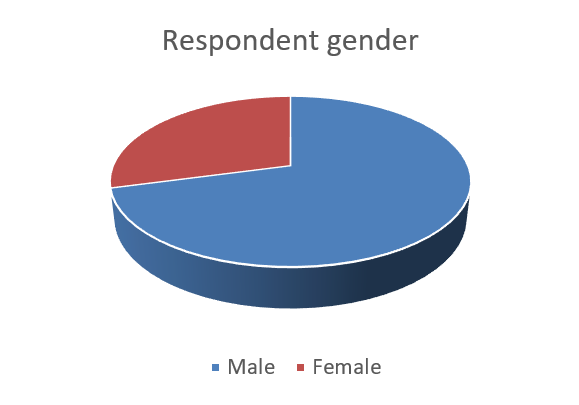
The purpose of this study is to apply the WebQual 4.0 technique to assess user satisfaction with the academic PortalSIA UINSU website. In addition to a measurement for overall user satisfaction, the study concentrates on the three main components of the framework: usability, information quality, and service interaction quality. 24 enrolled students in the Information Systems study program were given a survey as part of a quantitative descriptive approach. The results indicate that while overall User Satisfaction scored 3.71 (Good), the scores for the underlying quality dimensions were mixed. Usability received a score of 3.51 (Good), and Information Quality scored 3.36 (Fair). The lowest score was for Service Interaction Quality at 2.92 (Fair), identifying it as the primary area of concern. Key issues contributing to this include slow system speed, delays in academic data updates (such as grades and GPA), and the absence of a direct feedback mechanism. The study concludes that the PortalSIA website is generally accepted but requires significant improvements in technical responsiveness and user communication channels to enhance the user experience fully. The findings demonstrate the effectiveness of the WebQual 4.0 model in providing a structured and objective assessment for evaluating web-based academic systems.
References
A. A. Melati, “Analysis of Website Quality on Telemedicine User Satisfaction using WebQual 4.0,” J. Sist. Inf. dan Komput. Terap. Indones., vol. 3, no. 2, pp. 45–52, 2021, [Online]. Available: http://tunasbangsa.ac.id/ejurnal/index.php/jsakti/article/view/303/281%0A
M. Q. Aini, “WebQual 4.0 Plus: An Approach to Measure Customer Satisfaction toward Website Quality,” J. Eng. Inf. Syst. Bus., vol. 5, no. 3, pp. 134–143, 2023, [Online]. Available: https://ejournal.unesa.ac.id/index.php/JEISBI/article/view/59572/46174%0A
A. D. Arifin, S. H. Anwariningsih, F. Hari, and S. Al, “Analisis Kualitas Portal Komik Digital Interaktif Pikolo Dengan Metode Webqual 4 . 0,” vol. 5, pp. 110–123, 2021.
B. Metode, W. Pada, A. Arfian, D. Mustomi, J. Siregar, and A. A. Yana, “TRITANA DENGAN PLS-SEM,” vol. 5, no. 1, pp. 89–93, 2021, doi: 10.52362/jisicom.v5i1.
F. Hamzah, “An Integration of WebQual 4.0, Importance-Performance Analysis (IPA) to Evaluate Academic Information System,” J. Manag. Inf. Syst., vol. 2, no. 1, pp. 77–85, 2022, [Online]. Available: https://ejournal.uin-suska.ac.id/index.php/RMSI/article/view/10659/6136
M. L. Hamzah, “Evaluating User Satisfaction Using WebQual 4.0 Framework on Higher Education Websites,” J. Inf. Syst. Comput. Sci., vol. 4, no. 3, pp. 88–97, 2023, [Online]. Available: https://journal.stmikjayakarta.ac.id/index.php/jisicom/article/view/453/311
I. J. Education and C. S. Ijecs, “Evaluation of Abulyatama University Website Quality With an Importance Performance Analysis ( IPA ) Approach Based on Webqual 4 . 0,” vol. 1, no. August, pp. 43–51, 2021.
D. Ipa, “Mediacenter Website Quality Analysis Using Webqual 4 . 0 And IPA Methods Analisis Kualitas Website Mediacenter Menggunakan Metode Webqual,” vol. 3, no. 1, pp. 74–81, 2023.
D. Yulianto and T. Ismail, “Analisis Website Program Kreativitas Mahasiswa ( PKM Center ) Universitas Ahmad Dahlan Menggunakan WebQual 4 . 0 Analysis of Student Creativity Program Website at Ahmad Dahlan University,” vol. 20, no. 2, pp. 325–334, 2021, doi: 10.30812/matrik.v20i2.1098.
E. G. and M. Khosravani, “Quality Assessment of E-learning Website using Asymmetric Analysis,” Indones. J. Inf. Syst., vol. 13, no. 1, pp. 22–30, 2023, [Online]. Available: https://journal.ugm.ac.id/ijeis/article/view/63411/31170
Y. Oslan and H. Kristanto, “ANALISIS KUALITAS ssat.ukdw.ac.id DENGAN METODE PENDEKATAN WEBQUAL 4.0,” vol. 07, no. 01, 2021.
M. Q. Muftikhali, “Measuring the Quality of Higher Education Website using WebQual & IPA,” J. Teknol. Inf. Respati, vol. 6, no. 2, pp. 90–98, 2024, [Online]. Available: https://jti.respati.ac.id/index.php/jurnaljti/article/view/400/346
Z. R. Paguini and B. Sisephaputra, “Pengukuran Kepuasan Pengguna Terhadap Platform Stechoq Academy Menggunakan Metode End User Computing Satisfaction ( EUCS ) dan Webqual 4 . 0 ( Studi Kasus : PT . Stechoq Robotika Indonesia ),” vol. 05, no. 02, pp. 52–65, 2024.
R. Putra, “Website Quality Analysis Using Modified WebQual Method,” J. Teknol. Inf. dan Ilmu Komput., vol. 10, no. 2, pp. 67–74, 2024, [Online]. Available: https://j-ptiik.ub.ac.id/index.php/j-ptiik/article/view/9469/4273%0A
and E. V. R. S. Wirna, R. Hidayat, “Analysis of Website Quality Using The WebQual 4.0 Method,” J. Tek. Inform., vol. 9, no. 1, pp. 25–34, 2023, [Online]. Available: https://publishing-widyagama.ac.id/ejournal-v2/index.php/jointecs/article/view/2369/1542%0A
S. Rahmat, “ServQual and WebQual 4.0 for Usability Check of Academic Information System,” Indones. J. Informatics Comput. Sci., vol. 2, no. 1, pp. 40–47, 2021, [Online]. Available: https://socjs.telkomuniversity.ac.id/ojs/index.php/indojc/article/view/548/306%0A
A. Santiko, “Campus Websites Information Quality Measurement Model,” Indones. J. Inf. Syst., vol. 5, no. 2, pp. 112–121, 2024, [Online]. Available: https://journal.irpi.or.id/index.php/ijirse/article/view/666/263
T. Simanjuntak, “The Use of WebQual 4.0 and Importance Performance Analysis (IPA) for Website Evaluation,” J. Manajemen, Tek. Inform. dan Rekayasa Komput., vol. 7, no. 2, pp. 99–107, 2023.
D. Sundani, “Kualitas Sistem Informasi Pencatatan dan Pelaporan Kejadian Ikutan Pasca Imunisasi,” vol. 8, no. 200, pp. 35–41, 2022.
Y. S. Utomo, “Website Quality Evaluation using WebQual 4.0 Framework,” J. Inf. Syst. Innov., vol. 8, no. 1, pp. 56–63, 2024, [Online]. Available: https://journal.uc.ac.id/index.php/JUISI/article/view/2092/1576
Downloads
Published
How to Cite
Issue
Section
License
Copyright (c) 2025 Muhammad Alvin Nurrahman, Muhammad Irwan Padli Nasution

This work is licensed under a Creative Commons Attribution-ShareAlike 4.0 International License.
Authors who publish in JESII: Journal Elektronik Sistem InformasI agree to the following terms:
Authors retain copyright and grant the journal right of first publication with the work simultaneously licensed under a Attribution-ShareAlike 4.0 International (CC BY-SA 4.0) License that allows others to share the work with an acknowledgment of the work's authorship and initial publication in this journal.
Authors are able to enter into separate, additional contractual arrangements for the non-exclusive distribution of the journal's published version of the work (e.g., post it to an institutional repository or publish it in a book), with an acknowledgment of its initial publication in this journal.
Authors are permitted and encouraged to post their work online (e.g., in institutional repositories or on their website) prior to and during the submission process, as it can lead to productive exchanges, as well as earlier and greater citation of published work (See The Effect of Open Access).